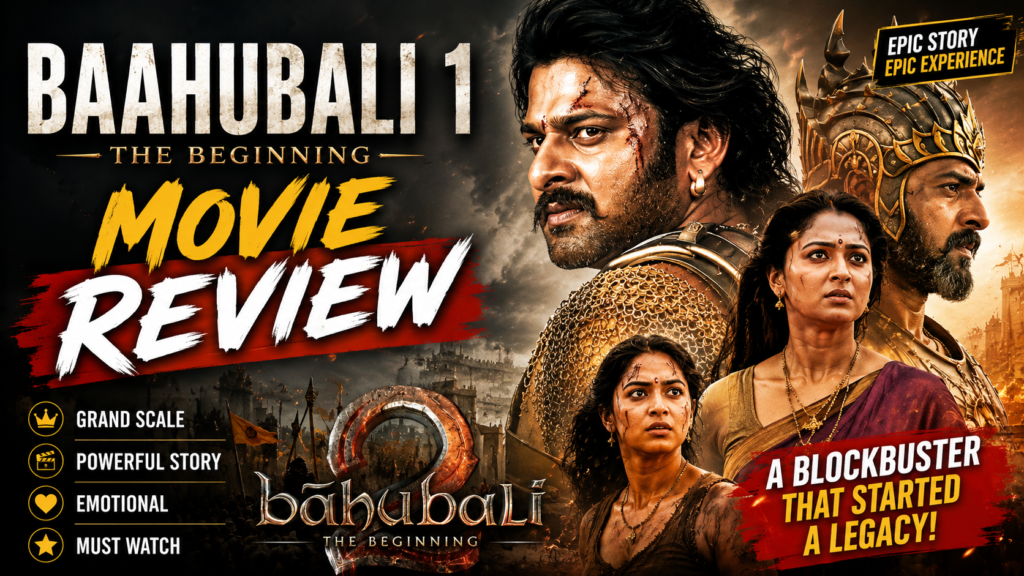

Baahubali: The Beginning isn’t just a movie—it’s a landmark. Directed by S.S. Rajamouli, this 2015 epic shattered box office records, redefined visual storytelling in Indian cinema, and gave the world a question that would dominate conversations for two years: “Why did Kattappa kill Baahubali?” . As the film celebrates its 10th anniversary in 2025, it’s worth revisiting this cinematic milestone to understand its legacy, its flaws, and why it remains a watershed moment for Indian filmmaking.
Film Overview & Cast
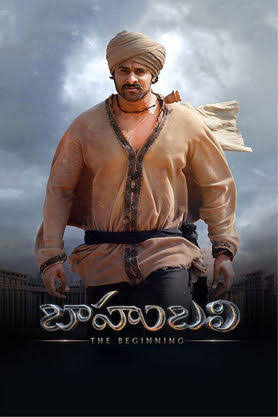
| Attribute | Details |
|---|---|
| Title | Baahubali: The Beginning |
| Release Date | July 10, 2015 |
| Languages | Telugu, Tamil, Hindi, Malayalam |
| Director | S.S. Rajamouli |
| Cast | Prabhas, Rana Daggubati, Anushka Shetty, Tamannaah Bhatia, Sathyaraj, Ramya Krishnan |
| Budget | ₹180 Crore (approximately) |
| Worldwide Gross | ₹650 Crore |
| Runtime | 159 minutes |
The Story: A Tale of Two Kings
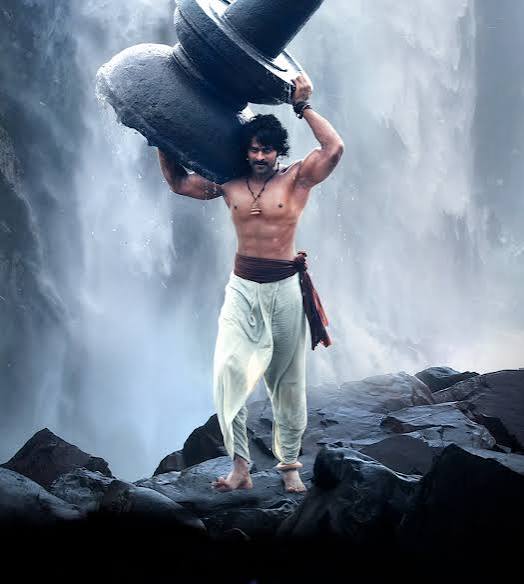
The film opens with a breathtaking sequence: a baby is carried through a raging waterfall by a woman who is then killed by soldiers. The baby, Shivudu (Prabhas), is found and raised by a kind-hearted tribal woman in a remote village beneath a massive waterfall .
Years later, the grown-up Shivudu—a young man with superhuman strength—becomes obsessed with climbing the waterfall after seeing a mysterious mask in the sand. His journey leads him to Avantika (Tamannaah), a fierce warrior fighting to rescue a captive princess from the tyrannical kingdom of Mahishmati. Shivudu falls for Avantika and agrees to help her mission.
What follows is a revelation: Shivudu learns he is actually Mahendra Baahubali, the son of the legendary Amarendra Baahubali, the true king of Mahishmati. The rest of the film is told in flashback, recounting the story of how Amarendra Baahubali was betrayed and killed by his own cousin, Bhallaladeva (Rana Daggubati), and his uncle, Bijjaladeva .
The film ends with Shivudu discovering his true identity and vowing to reclaim his father’s throne—and the haunting cliffhanger: “Why did Kattappa kill Baahubali?” .
For those who enjoyed the epic storytelling of RRR, Baahubali represents the foundation upon which Rajamouli built his later masterpiece.
What Works: The Grandeur and Vision
Rajamouli’s Unprecedented Vision
SS Rajamouli’s “quantum leap in the way he visualised his stories” is the film’s greatest achievement . At a time when Indian cinema was largely content with formulaic storytelling, Rajamouli dared to dream big. The sprawling landscapes of Mahishmati, the towering waterfall, and the intricate palace sets created an immersive world that felt both fantastical and grounded .
The film blurred the lines between practical effects and CGI, creating a visual experience that was unprecedented in Indian cinema . The attention to detail in the production design—from the costumes to the weaponry—demonstrated a commitment to world-building that rivaled Hollywood epics .
The War Sequence
The climactic battle between Mahishmati and the Kalakeya army is widely regarded as one of the best war sequences ever produced in Indian cinema . The “carpet-bombing” sequence, where massive boulders wrapped in burning cloth rain down on the enemy, and Bhallaladeva’s chariot with spinning blades at the front, are moments of pure cinematic genius .
Performances
The cast delivers memorable performances across the board:
- Prabhas brings both innocence and gravitas to the dual roles of father and son . While his acting may not be the most nuanced, his physical presence and commitment to the role are undeniable.
- Rana Daggubati is convincingly menacing as Bhallaladeva, the jealous cousin who will stop at nothing to claim the throne .
- Ramya Krishnan as Sivagami Devi is “right on point”—a formidable queen with a complex moral compass .
- Sathyaraj as Kattappa delivers a performance that makes the cliffhanger so compelling . His character’s loyalty and eventual betrayal became the stuff of pop culture legend.
Background Score
M.M. Keeravani’s background score is “haunting” and “soothing” in equal measure, elevating both the emotional and action-packed scenes . The music during the war sequence, in particular, is “haunting” and “gives you goosebumps” .
Technical Achievements
The cinematography by K.K. Senthil Kumar captures the grandeur of the production, while the VFX team, led by Srinivas Mohan, pushed the boundaries of what was possible in Indian cinema at the time . The art direction by Sabu Cyril is “out of the world,” creating a visually coherent world that feels both ancient and alive .
What Doesn’t Work: The Criticisms
The First Half Pacing
The film’s first half is widely criticized for its slow pacing . The introduction of Shivudu, his romance with Avantika, and the unnecessary song sequences drag the narrative . One reviewer noted, “20 minutes after the start of the film till the interval the pace slackens” .
Problematic Romance Subplot
The scene where Shivudu disrobes Avantika and applies makeup to her face has been criticized as “intrusive and regressive” . The sequence, meant to help Avantika realize her “full beauty,” reduces a fierce warrior to a tamed, prettified maiden . As one reviewer noted, “It made clear that while the women in the movie are strong-willed, they ultimately need taming” .
Over-the-Top Action
Some critics found the action sequences and heroics too exaggerated. One viewer noted, “They represented Prabhas as a superman, Spiderman, Hulk. Seriously this isn’t what we asked for” . The slow-motion sequences and unrealistic feats of strength have drawn comparisons to video games rather than serious cinema .
Uneven CGI
While the film’s visuals are generally praised, some VFX sequences are noticeable for their lack of polish . One critic called the CGI “flat and synthetic,” noting that scenes like the Shiva lingam being lifted and walked on water were unconvincing . Another reviewer pointed out that “soldiers running on the wall looked like a video game’s graphics” .
One-Dimensional Characters
Critics have argued that the characters lack moral complexity . Amarendra Baahubali is the glorified noble hero, Bhallaladeva is simply evil, and Sivagami Devi is aloof and mysterious . There is little gray area—characters are either purely good or purely bad .
The Rocky Start: A Surprising Story
One of the most fascinating aspects of Baahubali’s legacy is its initial reception. On Day 1, the film opened to negative reactions in the Telugu states, with some calling it “the biggest disaster in the industry” . SS Rajamouli recalled this as one of the most depressing moments of his career .
However, word-of-mouth across regions—particularly in the Hindi-speaking belt—began to shift the narrative. Family audiences started coming in, and the film found its momentum . As producer Shobu Yarlagadda said, he “blanked out” twice: first when the negative reactions came in, and again when the collections began to pick up .
Karan Johar, who distributed the Hindi version, later compared the film to Sholay, saying, “Just like ‘Sholay’, the team will tell you how they thought the film was a disaster. ‘Baahubali’ is the ‘Sholay’ of our times” .
Box Office Performance: A Commercial Juggernaut
The film’s success despite the rocky start is a testament to its power:
| Metric | Collection |
|---|---|
| Worldwide Gross | ₹650 Crore |
| India Gross | ₹516 Crore |
| Overseas Gross | ₹134 Crore |
| Hindi Version Net | ₹120 Crore |
The film became the highest-grossing Indian film of 2015 and the first South Indian film to cross the 500-crore mark at the worldwide box office .
For context, Baahubali 2 would later break these records with a worldwide gross of over ₹1,788 crore, but the first film’s success laid the foundation for that historic achievement.
The Cliffhanger: A Cultural Phenomenon
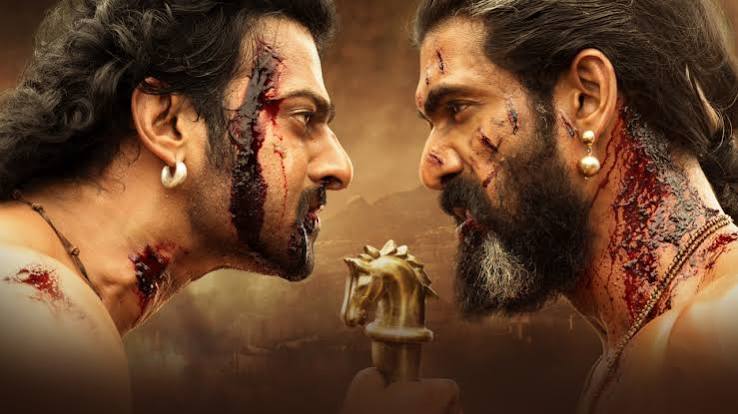
The ending of Baahubali: The Beginning—with the question “Why did Kattappa kill Baahubali?”—became a pop culture phenomenon . The question dominated social media, dinner table conversations, and even mainstream media for two years until the sequel’s release in 2017 .
However, some critics argue that this cliffhanger was more marketing strategy than narrative necessity . As one reviewer put it, “More than a narrative strategy, it felt like a marketing masterstroke to me. The emotional connect wasn’t organic, but forced” .
The Kalakeya Controversy
The portrayal of the Kalakeya warriors has also drawn criticism. The enemies of Mahishmati are depicted as a horde of “raping, plundering, uncivilized-looking brutes” with black faces, dreadlocks, and questionable personal hygiene, speaking a guttural tongue with clicks .
This portrayal has been examined in the light of how tribals and black Africans have historically been stereotyped in Indian and Hollywood cinema . As one critic noted, these tropes “fit in with the perception of appearance of rakshasas” but also rely on problematic stereotypes .
Legacy: Why It Still Matters in 2025
The Pan-India Movement
Baahubali: The Beginning made the term “pan-India” mainstream . It proved that a film from the South could dominate the national box office and compete with Bollywood in the Hindi heartland . This paved the way for future pan-Indian blockbusters like K.G.F, Pushpa, and RRR.
Confidence for a Generation
The film gave a generation of filmmakers across industries the confidence to think bigger, aim wider, and present stories on an uncompromised scale . It was a “cinematic breakthrough” that “opened doors for Pan-India films” .
A Benchmark
Even today, trade circles refer to box-office milestones as “non-Baahubali records,” a testament to the benchmark it set . It remains a high-water mark for Indian cinema.
Final Verdict
| Rating | Category |
|---|---|
| ⭐⭐⭐⭐ | The Hollywood Reporter |
| ⭐⭐⭐⭐ | The Quint |
| ⭐⭐⭐ | Indian Express |
Bottom Line: Baahubali: The Beginning is a cinematic landmark that changed Indian cinema forever. Despite its flaws—slow pacing, problematic romance, uneven CGI—it remains a must-watch for anyone interested in the evolution of Indian filmmaking.
Who Should Watch:
- Anyone interested in Indian cinema’s most important films
- Fans of epic fantasy and grand spectacle
- Viewers who enjoyed RRR, K.G.F, or Pushpa
- Those who appreciate ambitious world-building
Who Should Skip:
- Viewers sensitive to problematic representations of women and tribals
- Those who prefer tight, realistic narratives
- Anyone who finds over-the-top action sequences frustrating
- Viewers expecting Hollywood-level VFX polish
FAQs About Baahubali: The Beginning
Q: Is Baahubali based on a true story?
A: No, the story is entirely fictional, though it draws inspiration from Indian mythology and history.
Q: Do I need to watch Baahubali 1 before Baahubali 2?
A: Absolutely. The first film sets up the characters, plot, and the iconic cliffhanger that is resolved in the sequel.
Q: What was the budget of Baahubali 1?
A: The film was made on a budget of approximately ₹180 crore, making it one of the most expensive Indian films at the time.
Q: Why was Baahubali initially considered a disaster?
A: On Day 1, the film received negative reactions in the Telugu states. It was only through word-of-mouth, particularly in the Hindi belt, that it found its audience .
Q: Will there be a Baahubali 3?
A: Currently, there are no official plans for a third installment. The story was concluded in Baahubali 2: The Conclusion.
Recommended Reads
If you enjoyed this review, you might also like:
- Baahubali 2 Box Office Report – The record-breaking conclusion
- RRR Movie Review – Rajamouli’s later epic
- K.G.F: Chapter 1 Review – The film that continued the pan-India trend
- Pushpa: The Rise Review – Another south Indian blockbuster
- Pushpa 2: The Rule Review – The sequel that dominated 2024
External Resources
For more information about Baahubali: The Beginning and related films:
- IMDb – Baahubali: The Beginning – Detailed cast, crew, ratings, and user reviews
- The Hindu – Entertainment Section – In-depth reviews and analysis
- India Today – Movies – Latest news and reviews
- Indian Express – Entertainment – Critical analysis and retrospectives
- BookMyShow – Check showtimes and book tickets
- Rotten Tomatoes – International reviews and ratings
- Box Office India – Accurate box office data
- Koimoi – Box office collections and entertainment news
Disclaimer: This review is based on critical analysis and audience reactions. Viewer discretion is advised for violence and mature themes.
Have you watched Baahubali: The Beginning? Share your thoughts in the comments below—do you see it as a masterpiece or an overrated spectacle?